
Road trips are horrendously underrated. Too often, we focus entirely on the destination rather than the journey when traveling, jetting between gaycation hotspots like everywhere in between is as inconvenient as the average trek to a gay nudist beach.
LGBTQ+ road trips might seem like nostalgia-fueled wet dreams à la Priscilla or To Wong Foo—belonging to an age when flights weren’t so blissfully cheap—but actually, they still have a lot going for them. Some of the best LGBTQ road trips connect legendary gay destinations with unexpected queer-friendly stops, gliding past coastlines, beaches, mountains, towns, and roadside oddities en route.
Beyond the iconic Route 66, there are a range of gay road trip routes out there. Here are our top eight, plus road trip safety LGBT tips for planning your own.
LGBTQ+ Road Trip Routes Worth Taking
Miami to Key West, Florida — 3 to 5 Days
Approx. 165 miles / 265 km
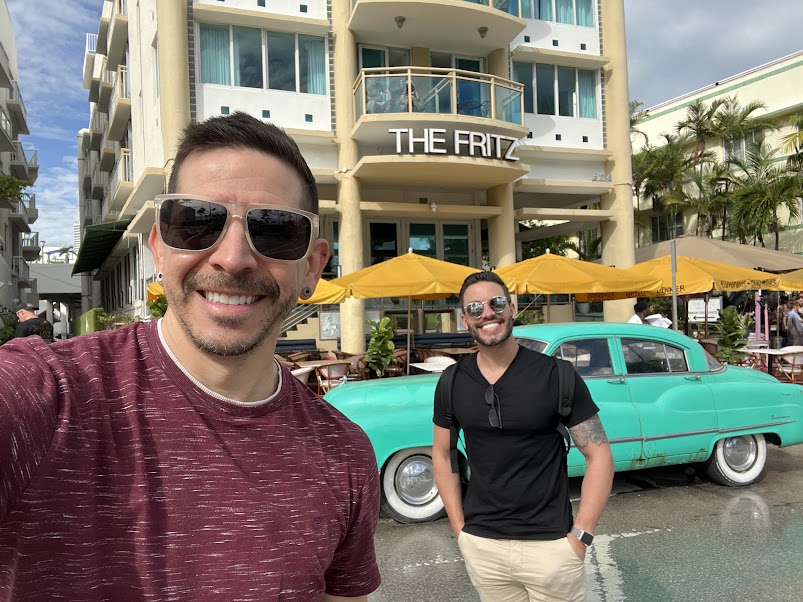
We’ve done this one ourselves, and it’s an absolute banger! Start among the hunk-filled beaches, gay bars, and Art Deco architecture of Miami before heading south through the Caribbean-like paradise of the Florida Keys. The Overseas Highway hops between islands via bridges surrounded by bright blue water, making the journey almost as much of an attraction as Key West itself.
Stop for seafood, kayaking, and sunset drinks in Islamorada or Marathon before arriving in famously eccentric Key West. The island has a long LGBTQ+ history, gay guesthouses like Island House, queer nightlife, and a wonderfully refreshing live-and-let-live attitude that can feel a world away from mainland Florida politics.
New York City to Provincetown — 5 to 7 Days
Approx. 350 miles / 565 km, plus detours
This one links three heavyweight LGBTQ+ destinations along the beautiful New England coast. Begin with a few nights in New York (although make sure your designated driver gets at least some sleep) before heading north toward Boston. Give yourself a day or two there, then continue through Cape Cod until the road essentially runs out and you arrive in iconic Provincetown.
Ptown has been an LGBTQ+ haven for generations, with queer-owned businesses, beaches, galleries, drag, nightlife, and an events calendar that’s especially kicking during the summer months. Add coastal towns like Wellfleet and beaches like Coast Guard Beach along Cape Cod to turn a relatively short drive into a proper week-long trip.

Berlin Through Central Europe — 8 to 12 Days
Berlin – Dresden – Prague – Vienna – Salzburg – Munich
Combine some of Europe’s greatest cities with castles, mountains, and probably a lot of beer. With relatively short distances between cities, you can spend more time exploring between driving stints.
Begin in famously queer Berlin, where you could easily lose yourself in its queer, techno, and fetish clubs. Best to give yourself at least a few days to recover before heading out on the road. Then head south through Dresden and across the border into Prague, one of the most beautiful cities in the world, with its awe-inspiring Gothic spires, grand squares, cheap beer, and pretty lively LGBTQ+ scene.
Continue to Vienna for imperial palaces, coffeehouses, and a more polished queer scene before cutting west through the Austrian countryside to Salzburg, birthplace of Mozart and filming location for The Sound of Music. Finish back in Germany in Munich, where traditional beer halls, handsome architecture, and a well-established LGBTQ+ scene with a kinky edge make for a suitably Bavarian finale.
Barcelona to Torremolinos — 10 to 14 Days
Barcelona – Sitges – Valencia – Madrid – Seville – Málaga – Torremolinos
This could easily be two separate road trips, but put them together and you get one big, gay Spanish adventure from north to south.
Start with Barcelona (everyone’s favorite European city) and head down the coast to nearby Sitges, a coastal town-meets-gaycation and Spain’s answer to P-Town, before following the Mediterranean south to Valencia. Spain’s third-largest city has an impressive old town complete with a cathedral, beaches, markets, and the epic City of Arts and Sciences.
Then turn inland and head into the center of the country to its capital, Madrid. There, you can combine world-class museums, tapas, and the bars and clubs of Chueca.
From there, head south into Andalucía for Seville, which seems like someone turned the dial up to a hundred when it comes to Spanishness. Expect orange-tree-lined streets, Moorish architecture, flamenco, and seriously good food. Continue on to Málaga for beaches, museums, and a lively historic center before finishing in nearby Torremolinos, one of Spain’s best-known LGBTQ+ beach destinations and where all the gays go to play in the summer.
If two weeks of driving feels ambitious, split it into Barcelona–Valencia–Madrid and Madrid–Seville–Málaga–Torremolinos.
Northern Italy to Rome — 8 to 12 Days
Milan – Lake Garda – Bologna – Florence – Tuscany – Rome
Italy rewards anyone willing to rent a car and venture beyond the autostrada.
Start with fashion, aperitivo, and LGBTQ+ nightlife in Milan before heading toward Lake Garda. Continue south to food-obsessed Bologna and Renaissance-packed Florence, then slow things down in Tuscany with hill towns, vineyards, and countryside stays.
Finish in Rome with several days of ancient ruins, ridiculously good pasta, and nights out around the gay venues near the Colosseum.
Just remember that many historic Italian cities restrict vehicle access in central zones, so check your hotel’s parking arrangements before cheerfully following Google Maps into a restricted street.
Northern Thailand’s Mae Hong Son Loop — 4 to 7 Days
Chiang Mai – Pai – Mae Hong Son – Mae Sariang – Chiang Mai
Thailand isn’t just Bangkok, beaches, and Full Moon Parties. Rent a car in Chiang Mai and northern Thailand quickly becomes a world of mountains, waterfalls, temples, hot springs, and tiny villages.
The famous Mae Hong Son region takes drivers through some seriously winding mountain roads, including stretches around Pai and Mae Hong Son itself. The roads can be long and twisty, so this is definitely not the route to rush.
Spend several days in LGBTQ+-friendly Chiang Mai before or after the loop, or add Bangkok or Phuket to the wider trip by flying rather than attempting to drive the entire country.
Buenos Aires to Mendoza, Argentina — 8 to 12 Days
Buenos Aires – Rosario – Córdoba – San Luis – Mendoza
Taking to the road in South America requires a little more preparation when it comes to safety and having the correct paperwork, but it is well worth the effort.
Start in Buenos Aires, perhaps the most European-feeling of Latin America’s great LGBTQ+ city breaks, before heading west across Argentina.
Break up the enormous landscapes with stops in Rosario and Córdoba, then continue through San Luis toward Mendoza, where vineyards sit beneath the Andes. The reward for all those highway miles? Malbec and mountain views!
You can finish in Mendoza or extend the adventure into the Andes, although taking a rental car across an international border into Chile requires extra paperwork and approval from your rental company.
Australia’s Southeast Coast — 12 to 16 Days
Sydney – Jervis Bay – Sapphire Coast – Melbourne – Great Ocean Road – Adelaide
Australia was made for road trips—just ask Priscilla—although its enormous size means choosing one region rather than attempting to conquer the entire continent.
Start with several days in Sydney, combining its famous harbor and beaches with the bars, restaurants, and LGBTQ+ nightlife around Oxford Street, before following the coast south toward Jervis Bay and the Sapphire Coast. The roughly 1,475 km coastal route between Sydney and Melbourne is one you’ll want to take your time with, stopping for beaches, national parks, and small coastal towns along the way.
After exploring Melbourne, arguably Australia’s cultural capital and home to one of the country’s biggest and most diverse queer scenes, keep going along the Great Ocean Road past surf towns, forests, and the Twelve Apostles.
Eventually, finish in Adelaide, a laid-back city surrounded by beaches and some of Australia’s best wine regions.

On the Road: Advice for Planning the Perfect Road Trip
You don’t need three weeks off work and a camper van to take a great road trip. Most of these routes can easily be shortened, split into sections, or extended with additional stops.
As a rough guide:
- 1 to 3 Days: Best for quick weekend getaways.
- 4 to 7 Days: Great for exploring a single region or coastal highway.
- 8 to 14 Days: Perfect for extended multi-state or cross-country adventures.
- 15+ Days: Ideal for massive national loops or taking things deliciously slow.
Generally, we’d rather spend a little longer somewhere than spend an entire vacation staring through a windshield. Four to six hours of driving on travel days is plenty for most trips.
A road trip should contain more road than airport, but it shouldn’t contain more driving than vacation. Also, although Celine Dion (and Cyndi Lauper) might have driven all night, you definitely shouldn’t. Aim for around four to six hours behind the wheel on a driving day, ideally less when taking scenic mountain roads. On winding routes like northern Thailand, two to four hours may be enough before concentration starts dropping.
Take a proper break roughly every two hours, switch drivers where possible, and avoid stacking several huge driving days together. If an eight-hour transfer is unavoidable, make the following day light or completely car-free.
Before an international road trip, also check exactly what documents you’ll need. Depending on the country, this can include your passport, driver’s license, an International Driving Permit (IDP), vehicle registration, rental contract, and proof of insurance. American travelers, for example, need an IDP in many countries, while requirements for foreign visitors driving in the U.S. vary by state.
Crossing a border in a rental car deserves extra attention. Within the EU, mandatory third-party insurance generally provides coverage across EU countries, but rental companies still need to know if you intend to take their car abroad so they can provide the correct documentation, insurance, and breakdown coverage.
Also check toll systems, low-emission zones, parking restrictions, winter tire rules, and whether national parks or protected areas require entry permits or advance reservations.
And plan overnight stops before leaving. Spontaneity is sexy; desperately searching for the only available motel within 150 miles at 11:45 p.m.—not so much!
Considering the Not-So-Straight Road: LGBTQ+ Road Trip Advice
Road trips let you travel well beyond established gay neighborhoods, which is part of their appeal. But that also means LGBTQ+ travelers should research the places between their headline destinations.
Check local laws and attitudes before leaving, particularly when crossing international borders. The U.S. State Department notes that laws affecting LGBTQ+ people vary dramatically internationally and recommends researching local laws and customs before traveling.
When picking overnight stops, LGBTQ+-owned hotels, gay-friendly guesthouses, and accommodations with recent reviews from queer travelers can offer a little extra confidence. Larger cities aren’t the only good options either: plenty of beach towns, wine regions, and smaller communities have welcoming businesses worth supporting. However, remember that “LGBTQ+-friendly country” doesn’t automatically mean every town along every highway feels exactly the same. That shouldn’t stop us from exploring though.
Couples may also want to check social attitudes before assuming that the affection you show openly in Barcelona, Berlin, or Provincetown will feel equally comfortable everywhere along the route.
Solo travelers should follow the same common-sense rules they would anywhere: let someone know the route, avoid arriving somewhere unfamiliar exhausted and late at night, keep the car fueled, and download offline maps before heading into remote areas.
Be the One Behind the Wheel
Road trips remind us that core memories aren’t just made in big cities or at Circuit parties. There’s a lot out there in the wilderness between worth experiencing too. And what could be more revolutionary than taking the wheel, choosing your own route, and seeing where the not-so-straight road takes you?

FAQ: Just the Tip
What are great road trip routes for LGBTQ+ travelers?
Great options include Miami to Key West, New York to Provincetown, Berlin through Central Europe, Barcelona to Torremolinos, northern Italy to Rome, Thailand’s Mae Hong Son Loop, Buenos Aires to Mendoza, and Australia’s southeast coast.
How do I find inclusive stops and towns?
Research LGBTQ+-owned hotels, gay-friendly guesthouses, queer venues, and recent reviews from LGBTQ+ travelers. Larger cities aren’t your only options—beach towns, wine regions, and smaller communities can also have welcoming businesses and make great overnight stops.
What documents are required for border crossings?
Requirements vary by country, but you may need your passport, driver’s license, International Driving Permit, vehicle registration, rental agreement, and proof of insurance. Always confirm that your rental company allows international border crossings before taking the car into another country.
How do I plan safe overnight stops?
Plan accommodation before setting off, particularly in remote areas or unfamiliar destinations. Research local attitudes toward LGBTQ+ travelers, choose well-reviewed inclusive accommodations where possible, avoid arriving exhausted late at night, and make sure you know where you’re sleeping before the road gets too lonely.
What apps help with route planning and community?
The article recommends downloading offline maps before heading into remote areas and researching tolls, low-emission zones, parking rules, and overnight stops in advance. It doesn’t name specific apps, so use your preferred mapping and travel-review platforms alongside LGBTQ+-focused travel resources.
Featured image by amir graphy from Pexels.



Comment (0)