
In a high-tech world where apps like Grindr and Scruff can have us ordering a hookup for the night—or, more likely, fifteen minutes—faster than a cheeky midnight pizza from Uber Eats, it seems anachronistic that cruising not only still exists, but is such a popular method of meeting guys.
Many gay men, for whatever reason, forgo the apps or even good old-fashioned bar flirting in favor of saunas, cruising bars, and outdoor cruising grounds that have existed since the 19th century. Why? Well, maybe partly because of app fatigue, but also because cruising isn’t just about the sex. It’s about the animalistic thrill of the hunt, the anonymity, the spontaneity—or illusion thereof—and, in the case of outdoor cruising, the risk of being caught… or possibly just a love of outdoor sex. Whatever the turn-on factor, cruising is every bit as much of a kink as leather or BDSM.
At its best, gay cruising is consensual, discreet, horny as hell, and rooted in a shared understanding between adults. At its worst, it can be awkward, unsafe, or even outright illegal. So, whether you’re an experienced hunter but interested in whether your gay cruising etiquette and strategies are sound, thinking of going to your local cruising bar for the first time and not sure what to expect, looking to get lost in the dunes of Maspalomas on your next gaycation, or simply wondering why there are more men than trees in a certain part of your local park at night, here’s a beginner-friendly guide to gay cruising.

What Exactly Is Cruising?
In a nut-filled shell, cruising is the act of looking for casual sexual encounters, either in controlled spaces specifically created for it, such as bars, saunas, and clubs, or in discreet public spaces like woods, parks, beaches, or even bathrooms. Understandably, conversation isn’t exactly on the agenda — watch the opening scene of Looking to see what happens there — and the act often relies much more on subtle signals, discretion, and reading the room — or, sometimes, reading the shrubbery.
Historically, cruising has been especially important for gay and bisexual men, particularly during times when being openly queer was criminalized, dangerous, or socially impossible. Before dating apps, before Pride parties, and even before gay bars, cruising was one of the only ways queer men could find each other at all.
Parks, beaches, public restrooms, train stations, and quiet corners of cities became coded meeting places, known only through word of mouth. Symbols like the now-infamous green carnation and colored hankies were used by guys to signify their purpose while appearing to the outside world as just “on a walk.” Places like Hampstead Heath in London and Central Park’s Ramble in New York City have cruising histories that date back to the 19th and mid-20th centuries, respectively, although it most certainly went on way before then. As for cruising establishments, technically “Molly houses” in the 17th century served as both meeting places for LGBTQ+ people and cruising bars, but actual dedicated, purpose-built “cruising bars” and saunas didn’t appear until around the 19th century.
Bars, Saunas, or Cruising Areas
Choose Your Hunting Grounds Wisely
The very first step in cruising is choosing your preferred hunting ground. Will you head to a sauna, bar, club, or known outdoor cruising area? It’s an important choice because each comes with its own distinct advantages.
Before heading out, the first thing you need to do is a little online research, or get some advice from your sluttiest—sorry, wisest—friend. Some things to consider are what facilities you are after, if any, and what kind of crowd is usually at the venue or area: older, younger, bears, twinks, leather guys, tourists, locals, or a thrillingly unpredictable mix of all the above.
The Pros and Cons of Cruising Establishments
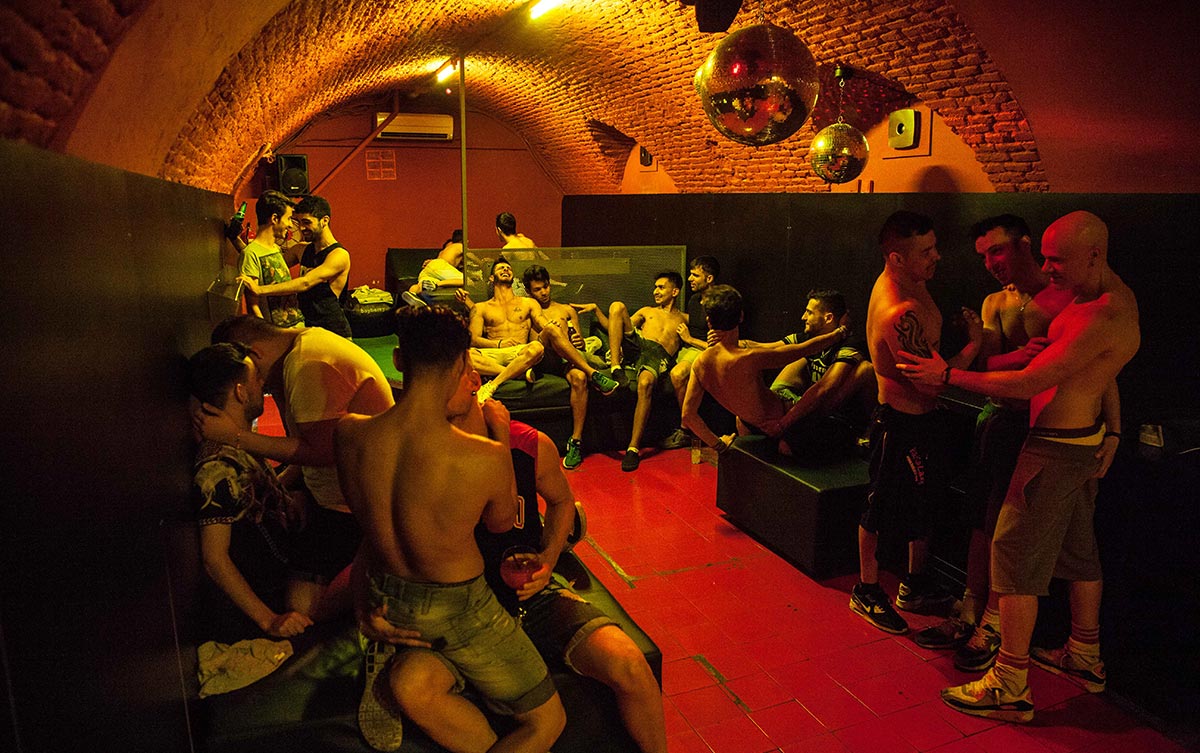
Cruising bars, saunas, bathhouses, darkrooms, and sex clubs are the more structured side of gay cruising. There’s generally no pretense about why anyone is there, and no hapless bystanders to avoid. This makes them a great entry point for beginners because they offer boundaries, rules, staff, and a clearer sense of context.
That said, gay saunas do have some element of roleplay to them. There’s a light pretense of simply being there to relax and enjoy the facilities, which can make them feel like the more chilled-out option and allow you space to take your time. Don’t think that means it’ll necessarily be tame, though, as those there truly know the score, and saunas usually also have darkrooms and private cabins, as well as steam rooms, showers, and actual saunas to take advantage of. Some saunas cater more toward younger guys, some toward bears, and some toward a post-party crowd. Again, research is your friend.
Cruising bars and sex clubs, on the other hand, have zero pretense. Some are more social than others and come with bars attached, but you can usually expect quicker—and sometimes more aggressive—action in their darkrooms, slings, glory holes, and fetish-specific areas, depending on the venue. They also tend to hold nights dedicated to certain themes that could be aesthetic, such as leather, PVC, naked, jockstraps, or masks, or event-based, such as BDSM, fisting, or piss play. Make sure you check their website so you know what you are getting into. Also, read their rules. Most are likely to be common sense, like no photos, no phones in certain areas, no harassment, and no behaving like you were raised by wolves. But it pays to be prepared. Some sex clubs require membership, which is usually easily acquired upon entrance.
The Pros and Cons of Cruising Areas
Public, or semi-public, cruising is where things get more complicated, more old-school, and, depending on the location, more legally risky. But that’s also part of the thrill. Cruising areas usually just need a few key ingredients: gay men, hidden or semi-private spots, and a setting quiet enough for people to linger without immediately attracting attention. Think wooded areas, dunes behind gay beaches, secluded paths, certain parks, or tucked-away corners near nightlife districts.
If you are uncertain, then try the most world-famous areas like Hampstead Heath in London, The Ramble in New York City, Maspalomas Dunes in Gran Canaria, Playa del Muerto in Sitges, and Tiergarten in Berlin. These places are well known for a reason, and while that does not remove all risk, it does mean you are less likely to accidentally mistake a random jogger for a horny cruiser.
For outdoor cruising, also remember that the weather plays its part. The hotter it gets, the more men are likely to be there—and the hornier they may be. A warm summer evening near a gay beach or park can change the atmosphere entirely. A freezing Tuesday in February, less so.

The Hunt: Reading the Signs
R-E-S-P-E-C-T: Respect the Fantasy
Wherever you cruise, remember first and foremost that just because potentially “everyone knows why they’re here” does not mean “anything goes.” Consent, respect, hygiene, and basic social intelligence still very much apply. The fantasy may be animalistic, but your manners should not be.
Also, try not to shatter the illusion by doing obvious mood killers, like talking too much or sitting down and having a picnic.
Get to Know the Area on Arrival
Your first step after arriving should be to get the lay of the land. Take a walk around, get your bearings, and do whatever helps you feel at ease. This is especially important if you’re new to a venue or outdoor cruising area. You don’t need to pounce the second you arrive. In fact, please don’t. If you attract attention before you’re ready, a simple whispered “I’ve just arrived, maybe later” usually gets the message across without making things awkward.
Once you’re comfortable, you generally have two options: choose a spot or keep moving. Both are valid, and you can switch between the two as the mood suits. Some people prefer to linger and let others come to them. Others like to wander, circle back, and see who keeps catching their eye.
Be Subtle, But Confident: Eye Contact is Key
Finding an interested party is all about picking up and giving out the right signals, which — in the case of dark bars and clubs — might feel ironic, given that half the room is lit like a haunted basement.
Cruising is not the place for loud flirting or catcalling. Eye contact, body language, and proximity often do the talking. One glance is nothing. Two glances may be curious. Repeated eye contact plus relaxed body language may suggest interest. A horny look, a move closer, or someone lingering nearby can all be signs that the feeling is mutual. The old-fashioned style was to grab your crotch when looking, but it’s seldom used anymore.
Outdoor cruising requires even more attention to detail, with clear signs being wandering without a clear destination, pretending to look at a phone, slowing down nearby, making repeated eye contact, or subtly following at a respectful distance after mutual signals.
From there, if they don’t come, try being bold and approaching them yourself. Outdoors, you can try a nod of the head in the direction of a secluded area, then move there. If the party is interested, they will follow. Obviously, in a darkroom, the rules are different. Touch is assumed. However, a tap on the side to move away should be reacted to immediately.
Be Ok with Rejecting and Being Rejected
If someone looks away and keeps walking, that is not coy. That is a no. If someone moves away, ignores you, turns around, removes your hand, or leaves the area, that is also a no. Do not take it personally, and definitely do not hover around like a horny ghost waiting for a change of heart. This is especially important outdoors, where the signals can be even more ambiguous. Do not chase, corner, pressure, or follow someone who is not clearly engaging back. Silence is not consent. Nervousness is not consent. Being alone is not consent. Confidence is sexy; entitlement is not.
You don’t have to look with utter horror or contempt should someone make a move on you that you don’t like. Simply walk away or politely remove an unwelcome hand. If this does not do the job, though, you are very much justified in giving a stronger and more forceful “no.”
Don’t Cockblock
Do not be a nuisance. Loud flirting, aggressive touching, blocking someone’s path, or interrupting people who are already clearly engaged with someone else is bad cruising etiquette.
If “a scene” is already in process, as in two or more people already having sex, it does not mean you are entitled to enter. In such a scenario, you can hover from a distance and watch, but wait to be invited to join. If not, move away and let other guys have their moments. Your turn may come. Or it may not. Either way, lurking three feet away with wounded impatience, or worse, trying to move up and slot yourself in where you are not wanted, is not the move. In other words, do not be a cockblock, a stalker, or a human pop-up ad.
Consent is everything. Just because someone is in a cruising location does not mean they are interested in you specifically. Cruising works best when everyone involved is observant, respectful, and willing to disappear gracefully when the answer is no.
Safety and Hygiene First
Shower no matter where you go. And douche if you are so inclined. The good news is that at saunas, there are facilities for this, but not always at cruising venues and certainly not out in the wilderness.
For outdoor adventures, wipes, lube, condoms, water, and a small bag for trash are all smart to bring. Clean up afterward. Do not litter, trespass, damage property, or create problems for the local community. Take everything with you, including wrappers, bottles, and possibly your dignity if things do not go according to plan.
Be mindful of alcohol or drugs, too. Cruising depends on reading signals and giving clear consent, both of which become harder when you’re not fully present. Sexy mystery is fun. Confusion, vulnerability, or regret is not. You want to be relaxed enough to enjoy yourself, but aware enough to make good decisions, respect boundaries, and notice when the energy changes.
Safety comes first. Always. Let someone know generally where you are, especially if you’re going somewhere unfamiliar. Keep your phone charged. Watch your belongings; the sad truth is that thieves are rife in cruising areas. Avoid carrying too much cash or valuables. If you meet someone and decide to go elsewhere, trust your instincts. If something feels off, leave.
The Extra Complications of Public Cruising
So, is cruising legal? The honest answer is: it depends where you are and what you’re doing. In many places, simply being in a known cruising area is not illegal. But sexual activity in public, indecent exposure, trespassing, or being visible to non-consenting members of the public can create legal problems. Know the local law, stay discreet, and don’t assume “but this is the gay area” is a valid legal defense.
Outdoor cruising requires extra caution because public space is shared space. Do not involve non-consenting people. Avoid areas where families, children, workers, or random passersby could easily see what is happening. Cruising culture only survives when discretion and respect are taken seriously.
Be aware of your surroundings at all times. Keep a 360-degree sense of who is nearby, what is happening, and whether you are putting yourself or others at risk. Dress for the weather, scope places out beforehand, and rely on word of mouth from trusted friends when possible. The “secret spots” are usually secret for a reason, and the best way to learn them is not by wandering blindly into the nearest bush with optimism and no phone battery.
Ironically, some apps are actually an aid to cruising. Platforms like Sniffies are built specifically around cruising, with maps, message boards, and location-based interaction. Squirt also has cruising listings and geolocation features in some places. These can make it easier to understand where cruising still happens and even set up a meeting in advance, which you may or may not feel ruins the point.
Obey the Golden Rule: Have Fun
The number one golden rule of cruising is simple: have fun. That’s what you are there for, after all. Remember, cruising isn’t a job, or a ten-inch lover, so take a deep breath, don’t take it too hard, and enjoy the hunt!
FAQ: Just the Tip
What is gay cruising?
Gay cruising is the act of looking for casual sexual encounters, usually through subtle signals rather than direct conversation. It can happen in controlled spaces like saunas, bathhouses, cruising bars, darkrooms, and sex clubs, or in discreet public or semi-public areas such as parks, beaches, dunes, wooded paths, and bathrooms. Historically, cruising was an important way for gay and bisexual men to find each other when being openly queer was unsafe or illegal. Today, it still appeals because of the anonymity, spontaneity, thrill of the hunt, and shared understanding between consenting adults.
How do people signal interest?
Cruising relies heavily on eye contact, body language, proximity, and repeated subtle signals. One glance may mean nothing, but repeated eye contact, lingering nearby, relaxed body language, or moving closer can suggest interest. Outdoors, people may wander without a clear destination, slow down nearby, circle back, or subtly follow at a respectful distance after mutual signals. A nod toward a more secluded area can also be an invitation. The key is to read the response carefully. If someone looks away, moves off, ignores you, removes your hand, or leaves, that is a clear no.
Is cruising safe?
Cruising can be safe when it is consensual, discreet, respectful, and approached with common sense. Saunas, cruising bars, and sex clubs often offer a more structured environment, with staff, rules, facilities, and clearer expectations. Outdoor cruising carries more risk because it takes place in shared public space and may involve legal, personal safety, or privacy concerns. Hygiene matters too: shower, bring condoms, lube, wipes, water, and clean up afterward. Alcohol and drugs can make it harder to read signals or give clear consent, so staying aware and in control is important.
What locations allow cruising?
Cruising may happen in purpose-built venues such as gay saunas, bathhouses, cruising bars, darkrooms, and sex clubs. These are usually the clearest and safest options because people generally know why they are there. Outdoor cruising areas can include wooded parks, dunes behind gay beaches, secluded paths, and tucked-away areas near nightlife districts. Famous examples mentioned in the article include Hampstead Heath in London, The Ramble in New York City, Maspalomas Dunes in Gran Canaria, Playa del Muerto in Sitges, and Tiergarten in Berlin. Legality varies, so always check local laws and stay discreet.
How do I avoid unsafe situations?
Start by researching the venue or area before going, or ask a trusted friend who knows the scene. On arrival, walk around first, get your bearings, and do not rush into anything. Keep your phone charged, avoid carrying valuables, and let someone know generally where you are if you’re going somewhere unfamiliar. Trust your instincts: if something feels off, leave. Do not follow, pressure, corner, or touch anyone who is not clearly interested. Outdoors, avoid areas where non-consenting people could see what is happening, and always stay aware of your surroundings.
Feature image by Alessia Elia from Pexels.



Comment (0)